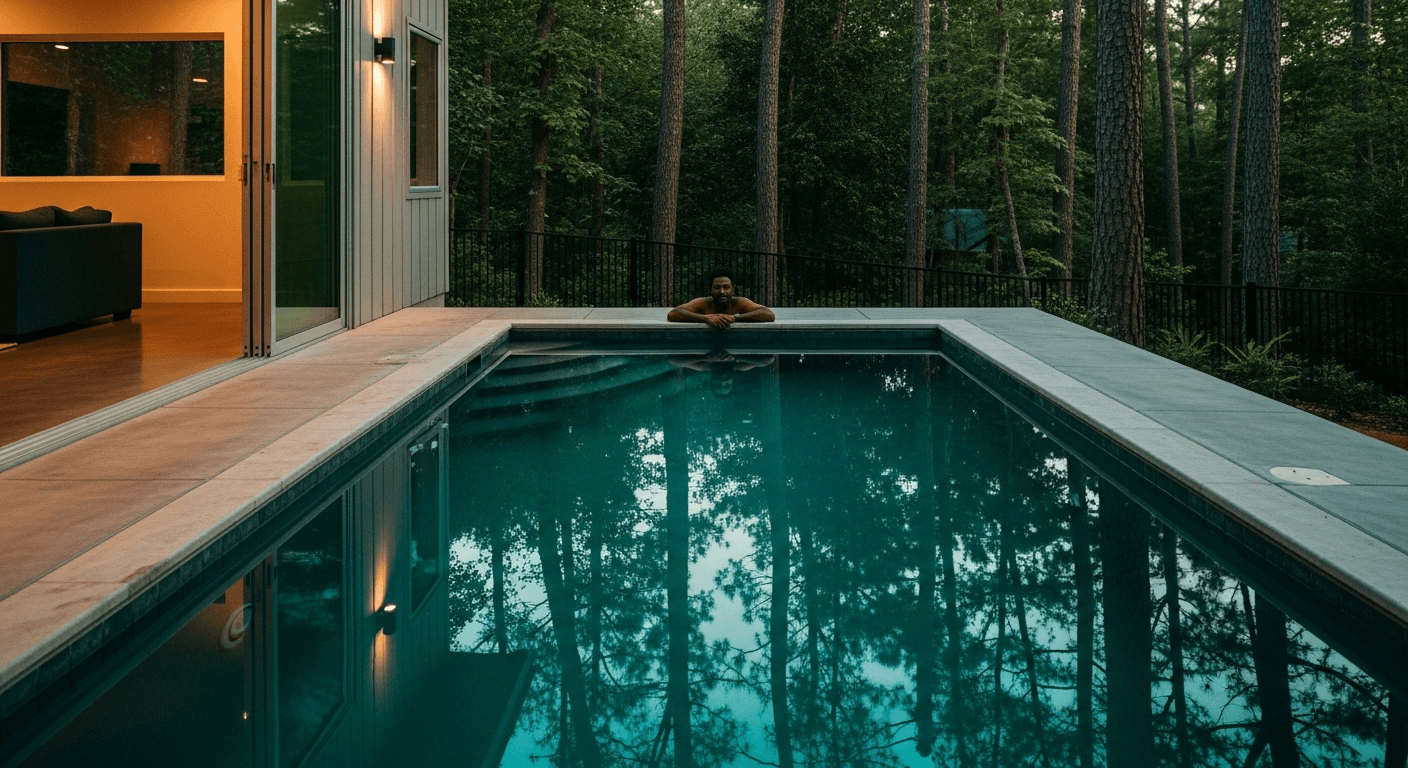
In 1971, a family in a Madrid row house looked at their 28-square-meter backyard and made a decision: pool.
Not a garden. Not a patio. A pool.
They sacrificed nearly the entire yard to it. And fifty-plus years later, an architecture studio called aceboXalonso took that same house and asked a different question: what if the pool became the room?
The result is the House of the Green Pond: an interior/exterior project where the pool is no longer the thing you look at from the house. It's the thing the house is organized around. The water is structural to how the space feels, how light moves, how the rooms relate to each other.
I keep looking at this project because I see the same conversation happening in Atlanta backyards right now, just in reverse.
People are adding pools to yards that weren't built for them. Sacrificing the last 400 square feet of usable outdoor space to drop in a plunge pool or a lap pool because the summers here demand it. And most of the time, the pool ends up fighting the house instead of completing it.
What aceboXalonso did in Madrid is the lesson: when the outdoor square footage is limited, stop treating the pool as an amenity you're fitting in. Start treating it as a room. Design the sightlines from inside toward it. Let it borrow square footage from indoors: glass walls, sliding panels, interior glass doors that open to the water edge.
The green tint of the water in this project isn't a mistake. It's intentional. It carries the color of the surrounding landscape into the architecture. That's the kind of decision that comes from treating a pool as a design element rather than a wet rectangle you're accommodating.
Atlanta's outdoor season is six months minimum. The pool math has always made sense here. The design thinking around it is usually what's missing.
Thinking about a move?
Beckett Real Estate works the whole of Metro Atlanta. Tell me the address or the neighborhood and I will tell you what the house is really like, what the inspection usually finds, and what the number should be.
See homes for saleTalk to an agent nowMore articles like this