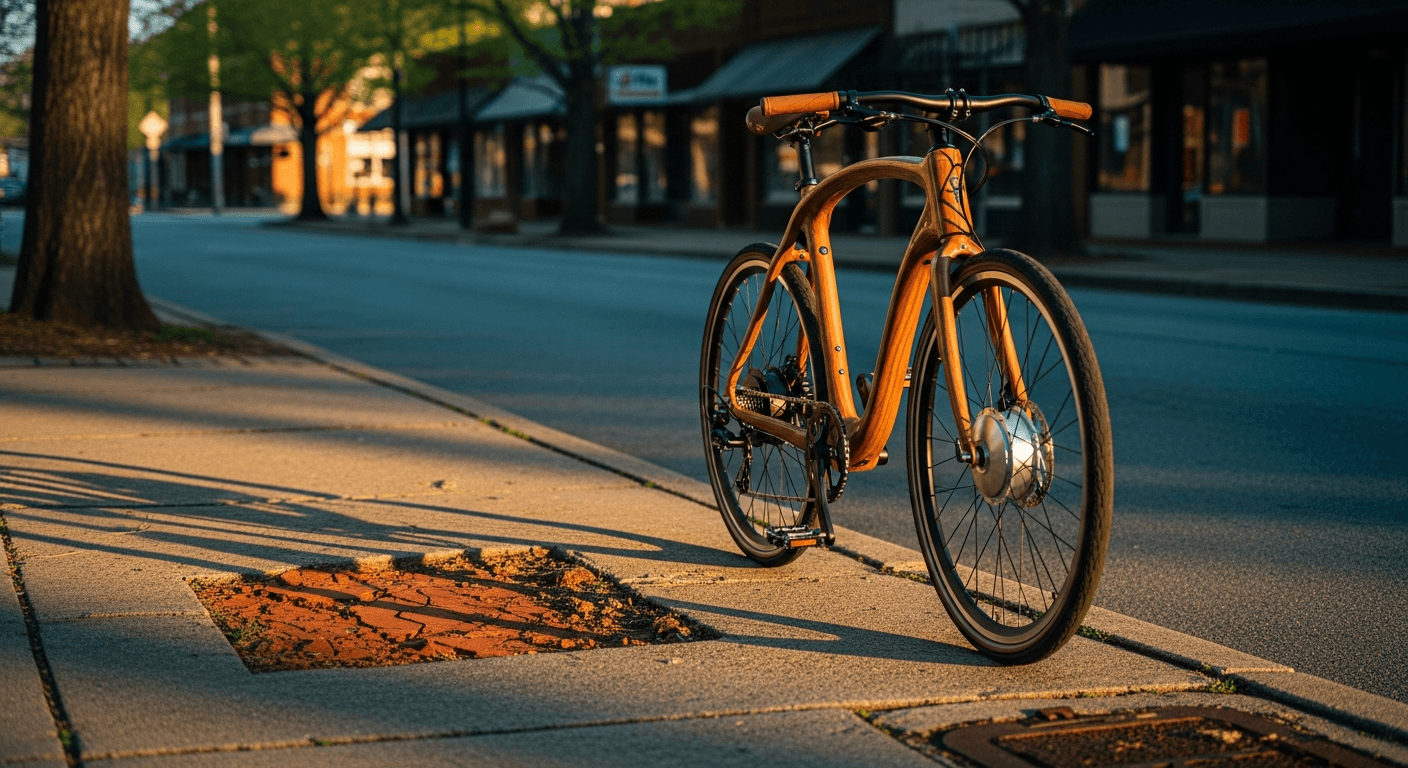
Esel's Eurban e-bike has a wooden frame. Before you close the tab, hear it out.
The frame is hollow, which means it absorbs road vibration the way a wooden guitar body absorbs sound. It's not a gimmick. Wood has natural dampening properties that aluminum and carbon fiber don't. The material has been treated to handle weather, so the objection most people have ("it'll warp in the rain") is addressed before you ask it.
Here's what's interesting from a materials standpoint: carbon fiber is stiff and light but transmits every crack and bump straight to your hands. Aluminum is stiffer still. Wood sits in a different category: it flexes slightly in a way that's predictable and self-damping. Furniture makers and acoustic instrument builders have known this for centuries. Applying it to a bike frame isn't crazy, it's just unusual.
The Eurban is positioned in the urban commuter space. Clean lines, no exposed cables, the kind of thing you'd lock up outside a coffee shop in Westside ATL without feeling like you rode in from a trail. That matters: most e-bikes look like they were designed by someone who loves batteries and hates proportions.
Three things worth noting: 1. The maintenance question is real. Wood requires a different kind of care than metal. How the treatment holds up over 3-5 years in Georgia humidity is something I'd want answered before buying. 2. The weight tradeoff. Hollow wood is lighter than it sounds, but the motor and battery still determine most of the rolling weight. The frame savings matter less than the spec sheet suggests. 3. The resale story is genuinely unknown. This is early-adopter territory. Either the frame ages beautifully and becomes a conversation piece, or it becomes a cautionary tale on Facebook Marketplace.
I don't have a verdict on whether it's worth the money: Robb Report didn't publish pricing in the excerpt. But the material choice is legitimately interesting. This isn't a brand putting a wood veneer on steel to call it "artisan." The structural logic holds.