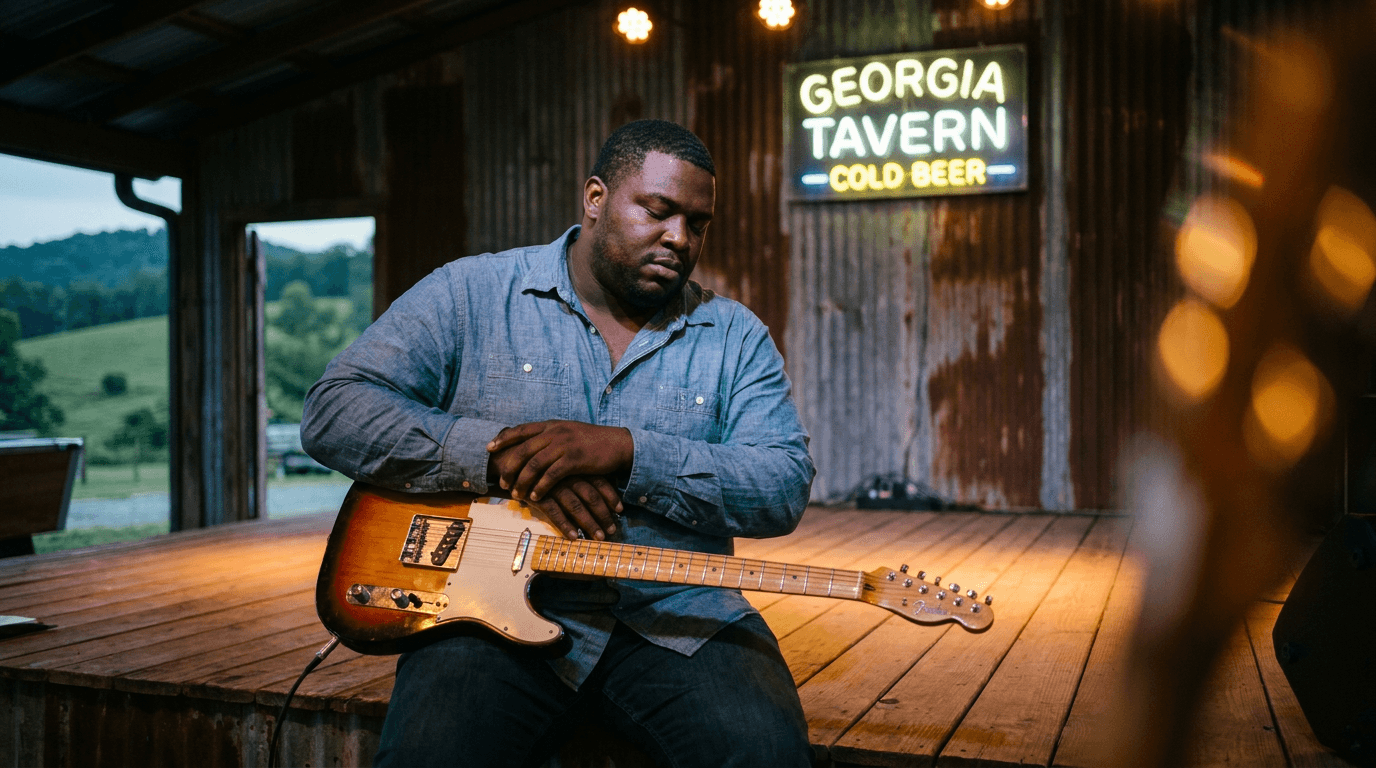
There is a specific kind of Southern artist that Garden & Gun covers better than anyone else, the one who spent twenty years standing in a famous shadow and finally stepped out of it not by running away from the legacy but by walking straight through it. Duane Betts and 'Isle of Hope' is that story.
If you grew up in the South with any antenna at all, you know the Allman Brothers. Dickey Betts gave the band half its vocabulary: 'Ramblin' Man,' 'Blue Sky,' the twin-guitar runs that rewired what Southern rock thought it was allowed to be. His son Duane spent years carrying that last name like a backpack full of someone else's gear. That is not a knock. That is just what it is when your father built something that big.
'Isle of Hope' is the record where the backpack comes off.

What the Record Actually Is
I have been listening to 'Isle of Hope' since it dropped, and here is the honest take: it is not a nostalgia trip. It is not a son paying tribute to a father. It is a musician who happened to grow up surrounded by world-class players finally making the record that proves he absorbed the right lessons and discarded the wrong ones.
The title is a geographic choice that tells you everything. Isle of Hope is a real place: a marsh-and-live-oak peninsula south of Savannah on the Georgia coast, one of those Georgia addresses that feels like it exists slightly outside of time. Naming an album after it is a declaration: this music is Southern, it is specific, and it is not apologizing for either.
What Betts does on this record is synthesize. The Allman Brothers DNA is in there: the twin-guitar interplay, the unhurried tempo choices, the willingness to let a solo breathe past the point where most modern producers would have faded it. But there is also a singer-songwriter restraint that his father never quite had, a tendency to pull back when the song calls for space rather than push toward the wail. That is not lesser. That is different, and in this case different is the growth.
The guitar playing is as good as anything being made in this genre right now. That is not a hedge. That is just accurate.
Why This Matters for Anyone Who Cares About Southern Music
Here is the thing about Southern music — the real lineage of it, not the Nashville-pop version of it — it has always been about geography as inheritance. The Allmans were Macon. Betts Sr. was Macon. 'Isle of Hope' is coastal Georgia, and that shift in latitude is audible. The record feels like salt air and Spanish moss and the kind of afternoon that only exists in the Low Country when the light gets long and gold and the heat finally backs off.
If you care about that lineage (and if you read this magazine, you probably do), this record is required listening.

The broader point is this: the South has always produced artists who are either running from where they come from or running toward it, and the ones who run toward it with eyes open tend to make the better work. Duane Betts ran toward Savannah, toward the coast, toward the specific geography of a Georgia that does not appear on a tourist board. That decision is all over this record.
I have been to Isle of Hope. It is one of those Georgia places that does not advertise itself: no Discover Georgia feature, no 'Top 10 Georgia Road Trips' listicle. A peninsula of marsh and old houses and a boat ramp and Spanish moss that looks like it was hung by someone with taste. The kind of place that Atlantans drive past on the way to Tybee and miss entirely. The fact that this record is named after it and carries that geography in its bones is the most honest thing about it.
The Connoisseur Play Here
If you want to do this right — and this is a Metro Luxe recommendation, not a concert-ticket ad — the move is to build the trip around the album.
Savannah is four hours from Atlanta. Isle of Hope is fifteen minutes from downtown Savannah by car. The Greyfield Inn on Cumberland Island is another two hours south. You can build a long weekend that moves through the exact geography this record inhabits: Savannah on Friday night (dinner at The Olde Pink House, cocktails at Artillery), Isle of Hope Saturday morning (the marsh walk, the boat ramp, the quiet), Cumberland Island Saturday night and Sunday if you have the foresight to book Greyfield months in advance.
Play 'Isle of Hope' on the drive down. Play it again on the drive back. It will sound different the second time.
That is not a streaming-platform recommendation. That is a road trip with a proper soundtrack anchored in the actual Georgia landscape the record came from. The difference between consuming an album and experiencing it is sometimes just a four-hour drive south on I-16.
Stream 'Isle of Hope' tonight. Then look at your calendar and figure out when you are driving to Savannah.