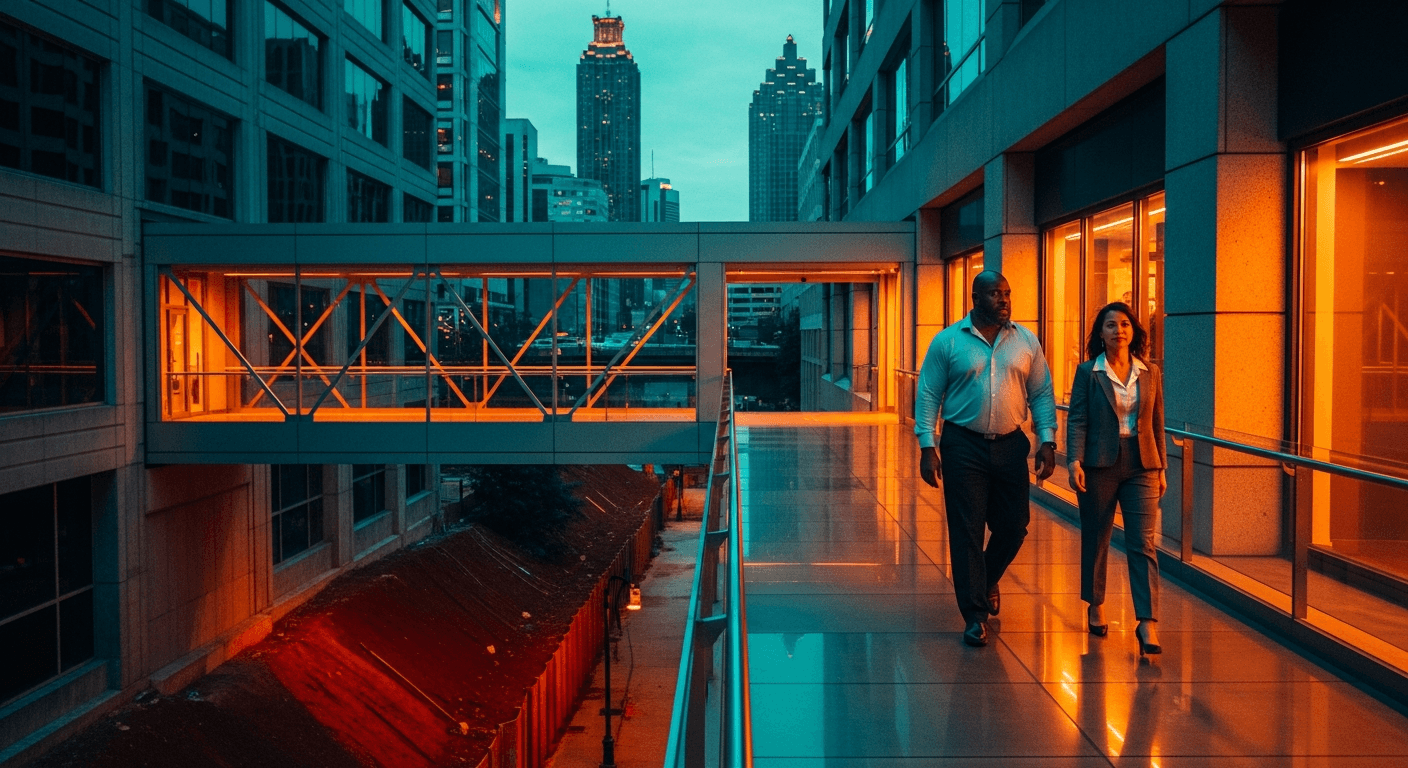
Hong Kong didn't beat the heat and traffic by complaining about it. They built around it, literally. A second city floating above the street, connected by elevated walkways that run through malls, office towers, transit stations, and public plazas without ever touching the ground.
The Cities Without Ground guidebook documented this in 2012: a full pedestrian network lifted above grade, separating people from cars, threading through private and public space without a clear seam between them. It wasn't a single master plan: it grew the same way good cities usually do, one pragmatic decision at a time, shaped by topography and heat and the logic of commerce.
What's interesting isn't that Hong Kong did this. It's why it works. The elevated network isn't a skybridge connecting two parking garages in suburban New Jersey: it's genuine urbanism at a second level. Real retail. Real dwell time. Real public life happening twenty feet above the street.
Atlanta has flirted with this idea for decades. The downtown connector kills street-level pedestrian life. The heat from June through September is genuinely brutal. The topography in Buckhead and midtown isn't flat. Every condition that pushed Hong Kong upward exists here in some form.
What doesn't exist here yet is the will to take it seriously as design rather than infrastructure. The difference between a walkable elevated network and a depressing skybridge is the same difference between a well-designed building and a code-minimum box: it's not the elevation, it's the intention.
Worth watching: what happens when Atlanta's next major mixed-use development actually connects above grade to its neighbors, not just as a convenience, but as a design move.
Thinking about a move?
Beckett Real Estate works the whole of Metro Atlanta. Tell me the address or the neighborhood and I will tell you what the house is really like, what the inspection usually finds, and what the number should be.
See homes for saleTalk to an agent nowMore articles like this