There's a corner of the gaming world that doesn't get enough credit from the people who should be paying attention to it.
Fighting games. The genre that's been around since the arcade era, never went away, and became one of the most technically demanding things you can do with a controller. Street Fighter, Tekken, Mortal Kombat: these aren't button-mashers for teenagers. At the top level, they're precision instruments. The people who play them seriously spend real money on real hardware.
And for a long time, that hardware had one annoying constraint: it needed a wire.

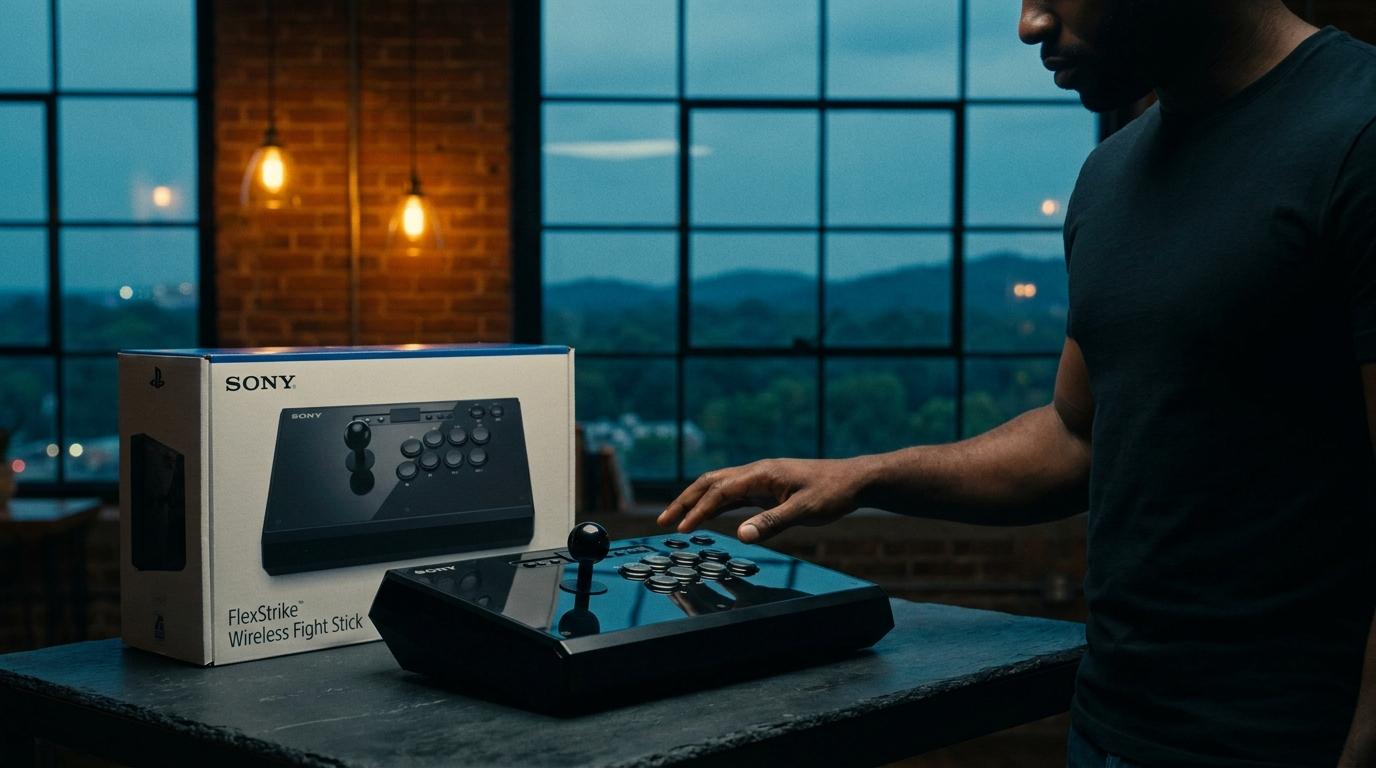
Sony just changed that with the FlexStrike Wireless Fight Stick. Official PlayStation peripheral. Full-size arcade layout. And, finally, no cable tethering you to the console like it's 2009.
What Sony Actually Built Here
The FlexStrike isn't Sony's first fight stick, but it's their first wireless one, and that distinction matters more than it sounds.
Fight sticks have always had a latency problem. The whole point of an arcade stick is precision: the tactile feedback of a real joystick, proper button spacing, zero input lag. Wireless peripherals have historically introduced just enough latency to make serious players dismiss them outright. A missed frame in a fighting game is the difference between landing a combo and eating a counter.
Sony's built the FlexStrike on their own wireless protocol: the same one that runs the DualSense Edge. That's not marketing language. That's a genuine signal about what's inside the hardware. If the latency profile matches the Edge, this thing is tournament-viable without the cable.
The button layout is standard Noir: eight buttons, familiar spacing, the kind that translates directly from years of arcade play. The joystick itself is a proper eight-way gate. There's also a touchpad (PS5 menu navigation), a pair of programmable rear buttons, and on-stick profile switching so you're not hunting through menus mid-session.

Battery life is listed at roughly 15 hours. Charges via USB-C. Compatible with PS5, PS4, and PC.
Retails around $200.
The 'Why It Matters' Part That Most Coverage Misses
The thing about fight sticks as a product category: there's a wide range of who actually buys them, and Sony building the FlexStrike changes the calculus for a specific buyer who's been underserved.
If you're a hardcore competitive player, EVO bracket, weekly locals, the Discord server that discusses frame data at 2am, you probably already have a Hori RAP or a Qanba Obsidian. You've modded the buttons. You have opinions about Sanwa vs. Seimitsu. The FlexStrike isn't aimed at you.
But if you're the guy who grew up in arcades, who played fighting games seriously in your 20s, who got back into Street Fighter 6 or Tekken 8 because they finally feel like they did in 1998, you're not looking for a modder's platform. You're looking for something that works, out of the box, without a cable running across your living room floor.
That's the FlexStrike's lane. And Sony built it well.
The wireless freedom is real. The build quality is proper: not plastic-toy territory, not the flimsy feel of third-party sticks. First-party build standards, official PlayStation hardware. If this is going on your entertainment center or in your game room, it looks the part.

At $200, it sits between the budget no-name sticks and the premium modding platforms. For most people getting back into the genre, that's the right price. You're not overpaying for features you won't use. You're not underpaying for a stick that'll frustrate you on the first session.
Who This Is For (And Who It Isn't)
Be honest with yourself before you buy a fight stick. It's a real skill to develop. The first few hours on a stick, even if you've played fighters on a gamepad for years, feel wrong. The muscle memory for joystick movement is different from analog sticks. Combo timing feels off. You'll lose matches you used to win.
That adjustment period is normal. It's also worth it, if fighting games are actually part of your rotation.
If you fire up Tekken or Street Fighter twice a year during a long weekend, the FlexStrike is probably more stick than you need. A good controller is fine.
If you've been playing fighters seriously on a gamepad and you're hitting the ceiling of what analog can do for you, your inputs aren't as clean as you want them, charge moves feel inconsistent, you're dropping combos that should be automatic, a fight stick is where you go from here. And this is the one to start with.
Sony's made something good here. The wireless piece isn't a gimmick: it's the feature that removes the last barrier most people had. No cable management. No tripping hazard. Just the stick, your hands, and whatever your opponent brings.
Drop your setup info in the comments if you're already running a fight stick, curious what people are gaming on in 2026.