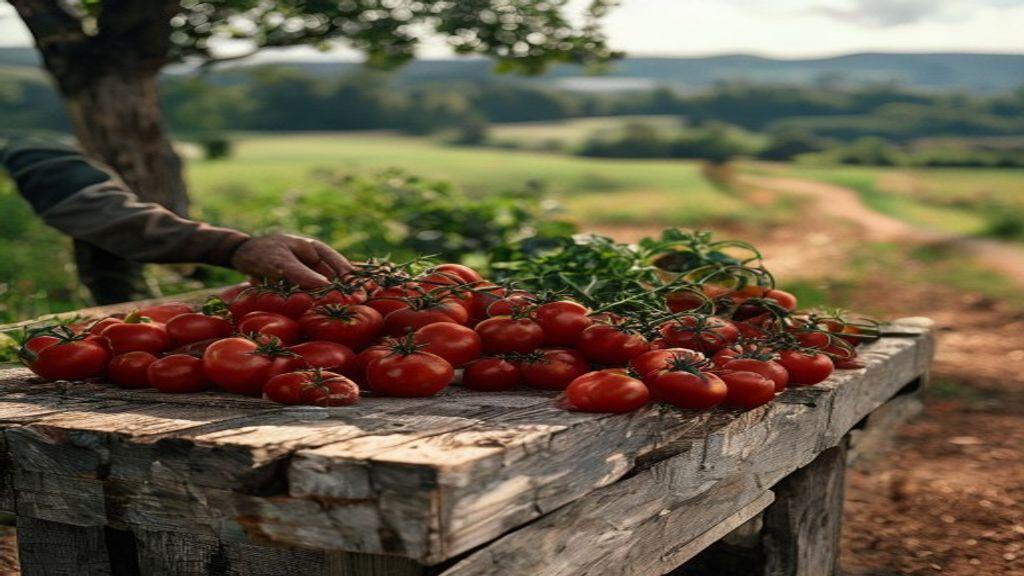
Garden & Gun runs an heirloom tomato name generator this time of year and the internet loses its mind over it, which tells you something true about where we are in the South right now. The heirloom tomato is not a trend. It is a reckoning. And in Georgia, it lands harder than anywhere else.
We grow some of the best tomatoes in the country. That is not a regional boast. It is soil chemistry, humidity cycles, and the specific heat differential between a North Georgia ridge farm and a Piedmont bottomland plot. Cherokee Purple does something different in Ellijay than it does in a California greenhouse. Mortgage Lifter on a Red Clay soil south of the fall line is a different fruit than what you find at a Whole Foods in any city you want to name. The name generator is a bit. The tomato itself is not.

Where to Actually Find Them in Georgia
The move is not a grocery store. It is not even a farmers market at Piedmont Park, though that is not a bad option if you are already there on a Saturday morning before 9 AM.
The move is smaller.
Jarrett Farm in Ball Ground (Cherokee County) has been running a CSA-adjacent stand off Hwy 140 since before 'farm-to-table' became a restaurant-menu cliché. They pull Cherokee Purple, Brandywine, and a few experimental crosses every summer that do not have names yet. You show up, you pick, you pay what the sign says. No app. No online order. That is the version worth knowing.
Down in Senoia (which is Coweta County for those not tracking the southside) a handful of small-plot growers sell through a rotating informal stand situation near the old downtown. If you know Senoia as 'that town where they filmed The Walking Dead,' you have been missing the actual story of that community for a decade. The agricultural life running parallel to the film crews is the better story.
Further north, Gibbs Gardens in Ball Ground is not a farm stand but the property's kitchen garden program gives you a sense of what serious horticulture looks like at scale in North Georgia. Worth the drive for context even if you leave empty-handed.
What to Do With Them (That Is Not a Caprese Salad)
Full transparency: caprese is fine. But it is the default move, and the heirloom tomato deserves better than the default.
Three things worth doing with a serious Georgia summer tomato:
First — the tomato sandwich. Not the dainty version. The real version. Duke's mayonnaise (not Hellmann's, not anything else), white bread that costs less than two dollars a loaf, salt that you add after the first bite because you realize it needs it. This is not a recipe. It is a practice. The Japanese have a word for the version of a thing stripped to its irreducible core. The Georgia tomato sandwich is that.
Second: sliced with nothing. Genuinely nothing. A Brandywine at peak ripeness, sliced thick, on a plate by itself, eaten standing at the counter while it is still warm from the car ride home. This is the test of whether the tomato is worth what you paid for it. No tomato that needs help passes this test. The ones that do pass it are worth remembering.
Third: in a skillet with eggs. Not fancy. Cast iron, butter, tomatoes halved and placed cut-side-down until they blister, two eggs cracked in around them, lid on for ninety seconds. This is a Saturday morning at 7 AM before the heat comes. It is the best meal in Georgia four months out of the year.

The Deeper Thing Garden & Gun Is Actually Pointing At
The name generator is a bit. But the publication that runs it understands something that a lot of national food and lifestyle media misses: the South's relationship to its food is not nostalgia performance. It is not farm-fresh branding. It is a real and specific knowledge base about what grows in this soil, what tastes like this soil, and why that is worth preserving.
Georgia's agricultural identity runs deeper than peaches, which are, for the record, grown better in South Carolina these days, a fact that stings every Georgian who has ever bought a roadside peach. Tomatoes, field peas, Vidalia onions (which have an actual federal marketing order protecting the name and the growing zone), muscadine grapes, Ellijay apples, blueberries out of Alma and the Bacon County corridor: this is a food culture that the heirloom tomato moment is finally giving people permission to take seriously.
Metro Luxe covers Georgia the way it deserves to be covered. Not as a backdrop for trends imported from Brooklyn. As a place with its own thing going on, and the heirloom tomato, right now, in late spring heading into the heat of summer, is one of the clearest expressions of that.
Find the Ball Ground stand. Buy more than you think you need. Eat one in the car before you leave the parking lot.
You will understand everything after that.