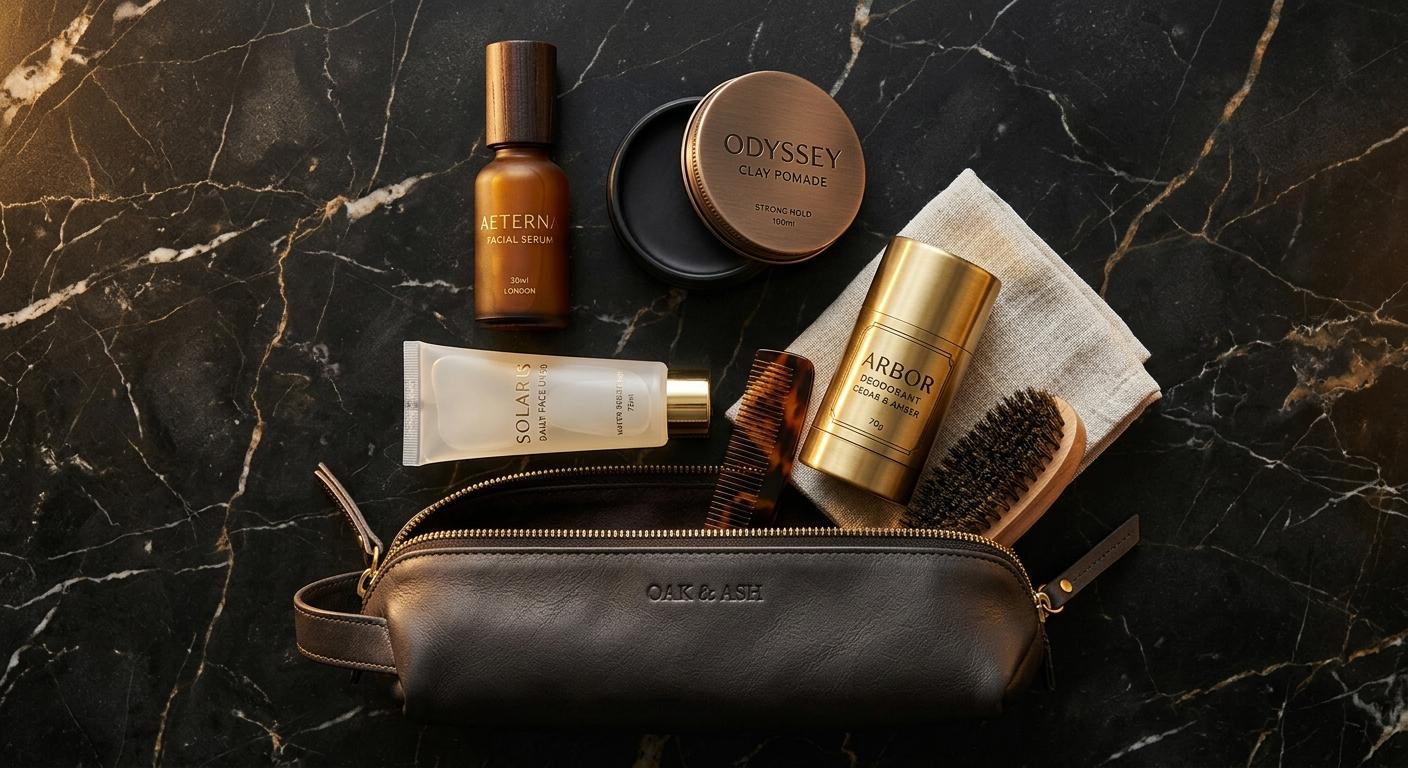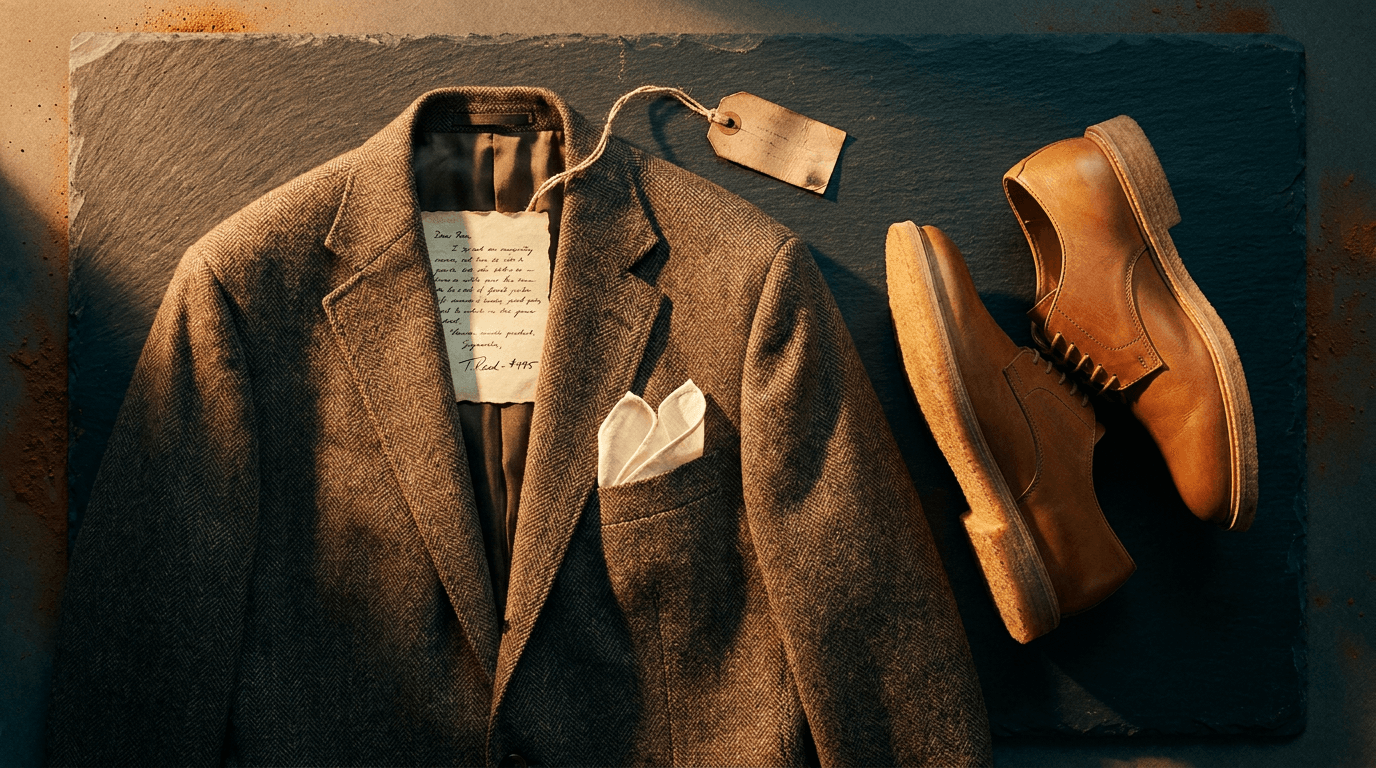
There's a version of getting dressed well that costs a fortune. There's another version that costs attention.
Most men never find the second version because they're not looking in the right places. They scroll the same five brand sites, buy the same four things, and wonder why their closet feels generic. Meanwhile, the guy who actually looks good is shopping differently, and he's been doing it for years.

Put This On runs what they call the 'Inside Track': a weekly edit of their hand-selected picks from eBay. It's a small thing. A newsletter feature. But it's pointing at something real: the thrifted and vintage market for men's clothing is better right now than it's been in twenty years, and most men either don't know it or don't know how to navigate it.
Here's what I know, and what I've learned from dressing well on the back half of a contractor's income before real estate started making sense financially.
Why the Secondhand Market Is the Smartest Place to Shop Right Now
Retail menswear pricing has gotten out of hand. A basic Oxford cloth button-down from a legacy brand now runs $150-180. A sport coat that a decade ago would've been $400 is now $700, and the construction quality hasn't kept pace with the price. Fast fashion moved upmarket, legacy brands moved aspirational, and the middle got hollowed out.
Meanwhile, eBay, Poshmark, and the better consignment shops are swimming in the product that was made when brands still cared about construction. The 1990s and early 2000s were the sweet spot for American and British tailoring, after manufacturing had been refined but before cost-cutting had gutted the interlinings, the canvas, and the real horn buttons.
A full-canvas blazer from that era on eBay runs $80-150 if you know what you're looking for. The equivalent new today (if you can even find true full-canvas construction under $800) doesn't exist at that price point. The math is not subtle.

Three things I look for when buying secondhand menswear:
1. The canvas test. Pinch the front of a jacket lapel between your fingers and roll it slightly. If you feel two layers moving independently, that's canvas: the real structural layer that gives a jacket its shape and drape. If it snaps back stiff and the layers move as one, that's fusing: the cost-cut version. Fusing delaminates over time, especially in Atlanta humidity. Canvas ages beautifully. This test alone separates the $80 score from the $80 mistake.
2. Shoulders and chest only. Everything else on a jacket can be altered for $60-150 at a competent tailor. But the shoulders are fixed: there's no economical way to rebuild a shoulder. Buy for the shoulder width and chest circumference. Let the tailor handle the rest. A $90 sport coat that fits the shoulders perfectly, with another $80 in alterations, is a $170 jacket that looks better than most $600 rack pieces.
3. Provenance tells you something. Brands that made things well and still do: Southwick, H. Freeman, Oxxford (if you find it, buy it), O'Connell's, Ralph Lauren Purple Label (not the Polo line, Purple Label), some early Brooks Brothers before the 2020 restructuring. Brands to skip regardless of price: anything licensed under a designer name without the original workshop, anything with a logo woven into the lining three times.
The Atlanta Angle Nobody Talks About
Most secondhand menswear advice reads like it was written for a guy in Brooklyn who has time to pop into consignment shops on his lunch break. Atlanta works differently.
The best physical hunting grounds in the metro right now: My Favorite Things in Avondale Estates, Stefan's Vintage Clothing near Little Five Points, and the Tuesday rotation at Goodwill on Tara Boulevard in Jonesboro, which pulls from Henry, Clayton, and Fayette County donations and catches a surprising amount of Southern professional-wardrobe cleanouts. Men who spent 30 years in law, finance, or medicine in the southside suburbs don't wear the same things as men who spent 30 years doing the same in Buckhead. Different taste level. Less logo-chasing. More substantive pieces.
Online, the Put This On 'Inside Track' approach is worth studying as a discipline even if you don't use their exact picks. The methodology is the lesson: identify a narrow category, build expertise in it, then buy decisively when the right piece appears at the right price. The opposite of browsing. The opposite of impulse.

For Atlanta specifically, the seasonal rotation matters. We run hot from April straight through October. That changes what 'good secondhand' means for us versus what it means for a guy in Chicago who can lean on wool nine months a year.
What to prioritize for a metro Atlanta warm-weather wardrobe built secondhand:
- Unlined and half-lined linen jackets — Irish or Italian linen, mid-to-heavy weight, unlined so they breathe. These are chronically undershopped on resale markets.
- Seersucker and cotton-silk blend trousers: the 38-44 waist range gets left on eBay because the mass market skews younger/slimmer. More opportunity for men who actually fit those sizes.
- OCBD shirts from the 1990s-2010s Brooks Brothers: boxy traditional fit, proper collar roll, real buttons. Fifty cents on the dollar at estate sales. Worth hunting.
- Nylon-strap dive watches and field watches, not menswear, but adjacent and worth mentioning. The summer watch rotation should be on rubber or nylon for anything under $5K on the wrist. Nobody needs a leather-strap Panerai sweating through a Saturday afternoon in Peachtree City.
Full transparency: this isn't a hustle or a trend. It's just math plus patience plus knowing what to look for. The wardrobe that looks best isn't always the one that cost the most: it's the one where every piece was bought with intention.
DM me if you want the specific eBay search strings I use for Atlanta-climate menswear. Two or three targeted searches beat an hour of random browsing every time.