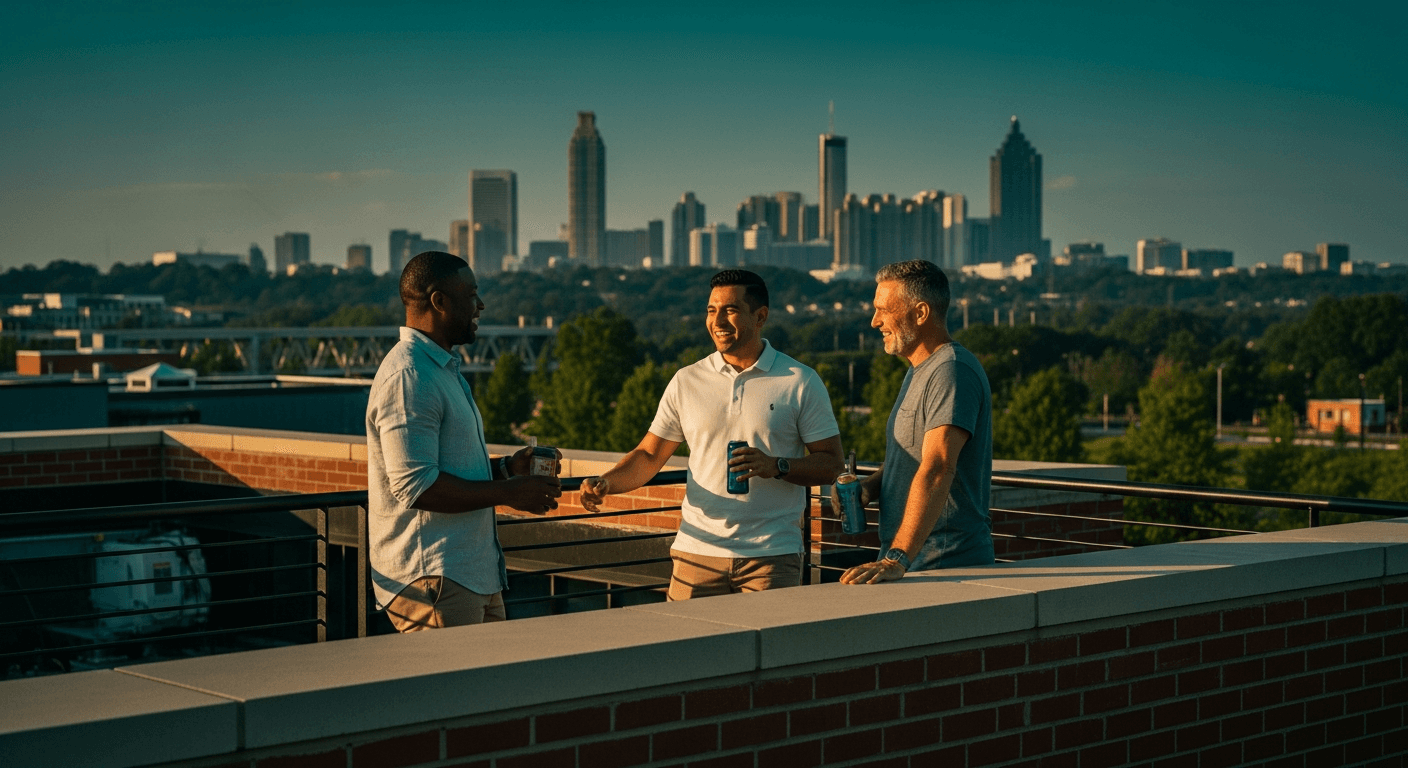
Most people treating Atlanta like a tournament layover are going to get the tourist version of the city: the hotel shuttle, the stadium concourse beer, the Uber back before midnight. That is fine. That is also a waste of one of the most genuinely interesting 48-hour windows Atlanta will see in a generation. Here is the resident version. No invented packages, no official designations I can't verify, no kickoff times I don't have in front of me. Just the move, for Georgians driving in from Peachtree City or Newnan or Gainesville, or for anyone hosting out-of-town guests who deserve better than a Tripadvisor printout.

Saturday: Stadium Energy Without Getting Swallowed By It
The mistake on a match day in Atlanta is trying to be too close to the action too early. Mercedes-Benz Stadium and the surrounding Vine City and English Avenue corridor absorbs a crowd in a way that makes the city feel one-dimensional if that's all you do. The better move is to arrive in the city before noon, drop your bag somewhere west of Midtown, and spend the first three hours of the day where the city actually lives, not where the tourists are told to go.
Ponce City Market on the BeltLine's Eastside Trail is the right first stop. Not because it's a secret (it isn't), but because on a July Saturday at 10 AM before the heat becomes criminal, the rooftop at Ponce City is one of the better places to be in Georgia. The view north toward Midtown and south toward Grant Park reads like a city that figured something out. Grab whatever you're drinking, find a seat on the Skyline Park level, and let the city come to you for an hour. You've earned it, it's July, and the rest of the day will require energy.
Lunch belongs somewhere in Inman Park or Reynoldstown. The stretch along Moreland between Edgewood and Dekalb Ave has matured into something real over the last five years. The food is better than it should be for how few people outside the neighborhood know it. Skip anything with a waiting list posted on a chalkboard. Walk until something looks like a kitchen someone cares about, and go in.
By 3 PM the pregame energy around the stadium district starts building in the way it only does when the crowd is international. This is worth experiencing on foot, not necessarily inside any venue, but in the street. The flags, the scarves, the accents you don't hear on a random Tuesday in Buckhead. Walk from Castleberry Hill toward the stadium, give it an hour, take it in. That is the version of this tournament that Atlanta will remember offering, and you want to have been in it rather than watching it later on someone's Instagram.
Post-match, whatever the result: the Westside Provisions District or White Provisions stretch on Howell Mill is the move. The match crowd disperses toward downtown and Midtown. Westside goes quieter, the kitchens are serious, and the July evening light hitting those old brick warehouse walls does something that justifies the drive across town. Dinner here, unhurried, with people who know what they're doing in a kitchen, that is the cap on Saturday.

Sunday: Recovery, Brunch Done Right, and the Lake Exhale
Sunday during a major tournament week has a particular energy in host cities — not quite the match-day intensity, not quite back to normal. The city is still full but the urgency has lifted. This is the day to move slowly and use Atlanta the way residents actually use it.
Brunch in the city during World Cup week requires some navigation. Everywhere with a TV and a patio is going to be at capacity by 11 AM. The move is to either go early (before 10) or to go somewhere that isn't trying to be a watch party. The Virginia-Highland neighborhood on a Sunday morning, before the brunch crowd fully assembles, is still one of the quieter pleasures of living in this city. Walk it. Find somewhere that looks like it opens for the regulars, not the crowd.
By early afternoon, if you have any sense, you are leaving the city. Not because Atlanta fails on a Sunday (it doesn't) but because July in Georgia means the lake is calling and ignoring it is bad judgment. Lake Lanier is 45 minutes north of the city on a light-traffic Sunday afternoon. If you have access to a boat, or a friend with one, the answer is obvious. If you don't, the public access points on the southern end of the lake still give you what you actually need in July: cold water, open sky, no concrete, and the specific kind of decompression that only comes from being on the water when it's 92 degrees on land.
This is the part of the itinerary that separates the resident version of Atlanta World Cup week from the tourist version. The tourist goes back to the hotel. The resident drives north, finds the lake, sits on a dock or the bow of something, and does nothing productive for three hours. You come back to the city (or back down I-85 toward wherever you're from) having actually used the host city rather than just passed through it.
The Real Frame for This Weekend
Atlanta gets written about from the outside as a city people fly through, not a city people arrive to. World Cup 2026 is the highest-profile counter-argument this city has ever had. The stadiums, the infrastructure, the BeltLine, the food scene that has been getting very good for the last decade, all of it is on display in a way that doesn't happen again for a long time.
The resident's version of hosting that is not the official tour. It is knowing which neighborhood to walk before the heat sets in, which rooftop earns the view, which direction to drive when the city needs a break from itself. That is what 48 hours here looks like when it's done right.
If you're making the drive in from south of the city and want to know what else is worth the trip while you're here, DM Metro Luxe and we'll point you toward whatever's worth your Saturday.