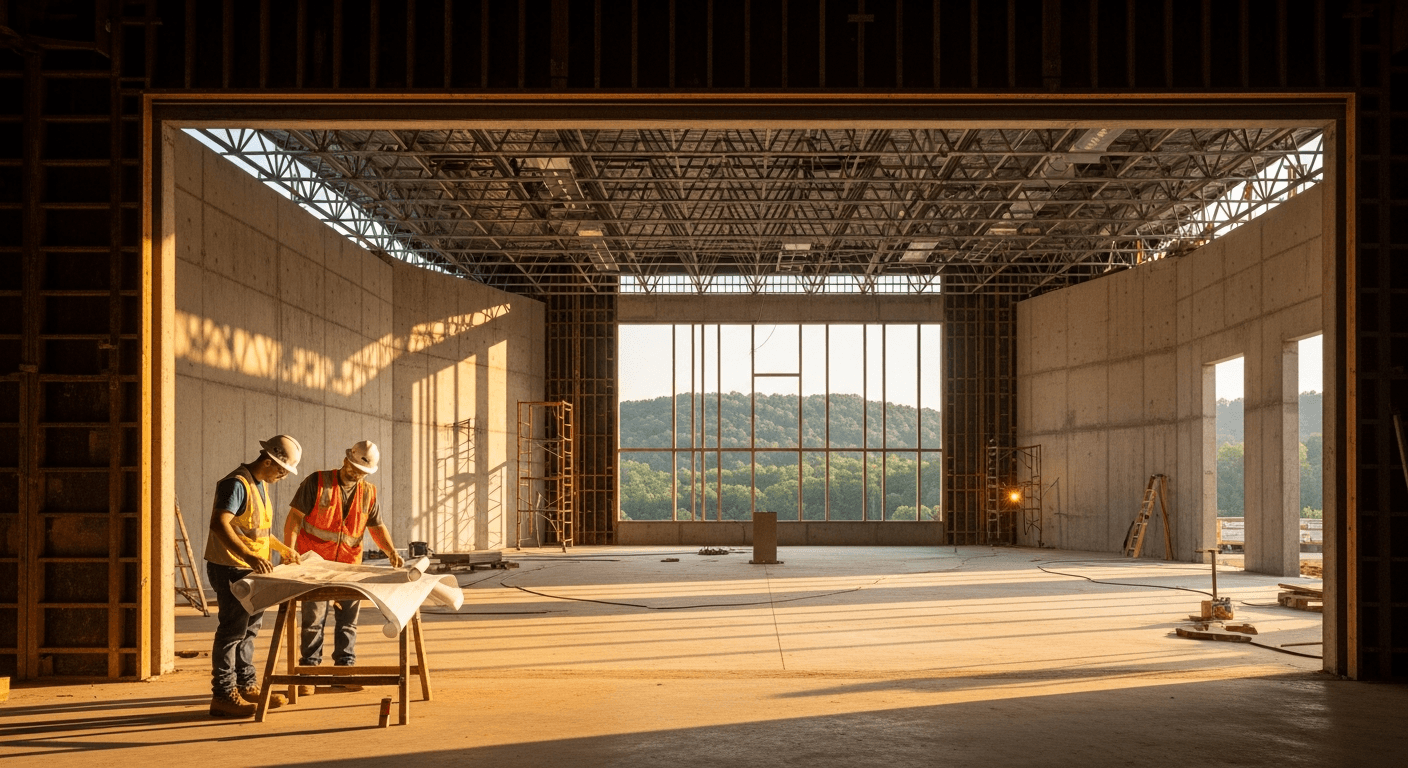
Bjarke Ingels Group just dropped the design for Nashville's new Tennessee Performing Arts Center: 307,000 square feet, four performance venues unified under one architectural framework, sitting on the East Bank along the Cumberland River next to Cumberland Park and Nissan Stadium. Construction starts 2027, doors open 2030.
Let that sit for a second.
Nashville is planting a civic anchor on a waterfront that, ten years ago, was an afterthought. The East Bank isn't just getting a performance venue. It's getting a piece of architecture that will define how people understand that neighborhood for the next 50 years. BIG doesn't do background buildings. When they take a commission, the building becomes the conversation.
The design brings four venues under one roof through what BIG describes as a 'unified architectural framework.' That phrase does a lot of work. It means the building isn't a collection of boxes with a shared lobby. It's a single architectural idea that the individual halls inhabit. Think Hudson Yards' Vessel, but instead of a social media prop, you get actual cultural infrastructure.
Here's why Atlanta readers should care: the Southeast is in an infrastructure arms race for cultural credibility, and Nashville just made a significant move. Memphis has been investing in its riverfront. Chattanooga rebuilt an entire neighborhood around the Tennessee Aquarium twenty years ago and is still reaping the returns. Charlotte is adding density around its arts district faster than most people realize.
Atlanta has world-class museums and a performing arts scene that punches above its weight. But we haven't made a single civic architecture statement at this scale in a long time. The Beltline is urban infrastructure. The TPAC is a flag in the ground.
The waterfront angle is worth noting separately. Nashville's East Bank sits on the Cumberland River. Atlanta doesn't have that card to play, but we do have the Chattahoochee, and that corridor has been percolating for years without a defining project. When a city like Nashville drops a BIG building on its river, it sets the benchmark for what serious looks like.
The building itself (from what BIG has revealed) follows their characteristic move: a bold geometric form that reads as sculpture from a distance and as civic space up close. WRA and HASTINGS Architecture are co-designing, which matters. William Rawn Associates has done serious performing arts work (think Tanglewood, think Seiji Ozawa Hall). This isn't a star architect parachuting in with a concept that ignores acoustics and operational reality. There are real performance venue specialists in the room.
What to watch: the interior programming decisions will matter as much as the exterior form. Four venues under one roof is ambitious. If the acoustic and operational separation between halls is done right, this becomes a model for mid-sized American cities trying to consolidate cultural infrastructure. If it's done wrong, it becomes an expensive lesson about why opera houses and black-box theaters have different needs.
For now, the design signal is strong. Nashville is making the bet. Atlanta is watching.
Thinking about a move?
Beckett Real Estate works the whole of Metro Atlanta. Tell me the address or the neighborhood and I will tell you what the house is really like, what the inspection usually finds, and what the number should be.
See homes for saleTalk to an agent nowMore articles like this