
There's a certain type of Saturday that starts with one thing on the list and ends with three projects you didn't plan, a bag of potting soil in the wrong place, and something alive that you're now responsible for.
That's not a failure. That's how a real outdoor project actually goes.
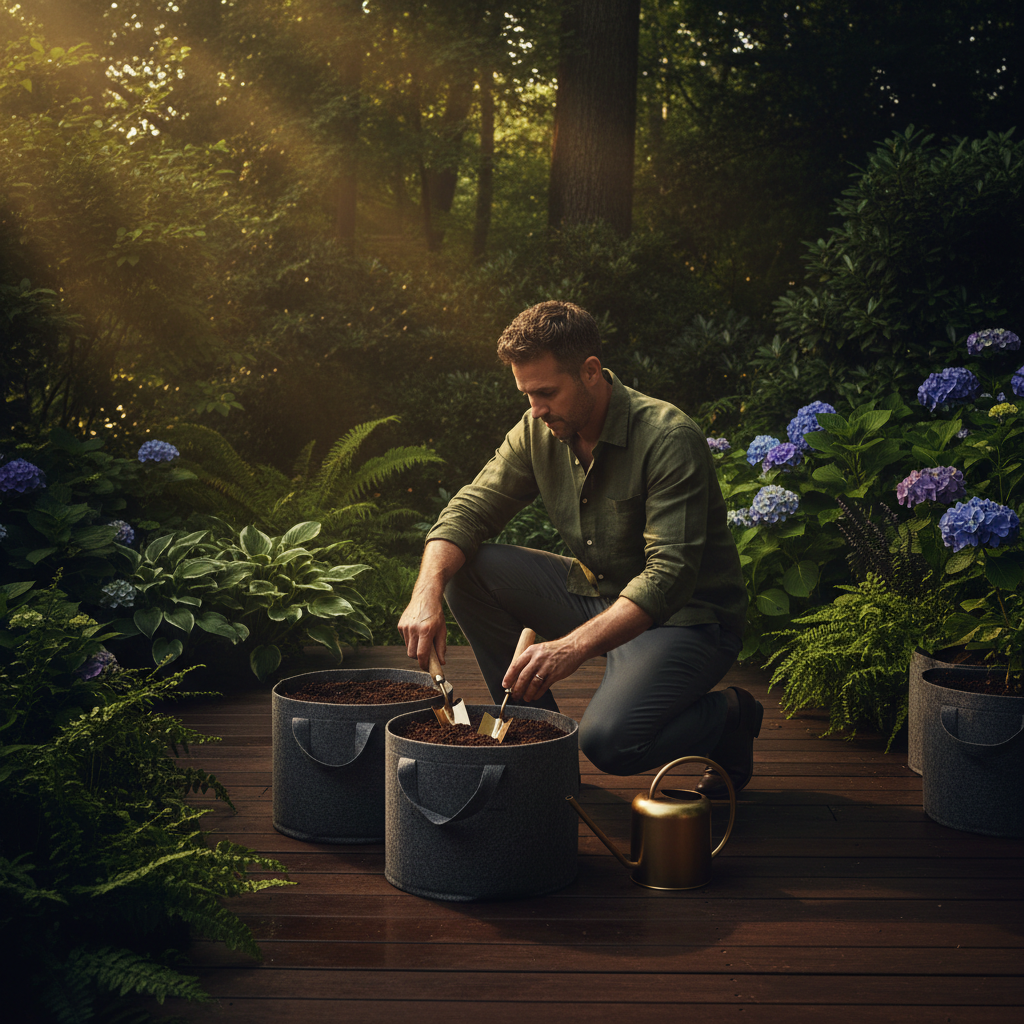
The Art of Doing Stuff ran a piece this week that captured this exactly: leafcutter bees arriving in a zip-lock bag, a grow bag operation expanding past its original mandate, and the author discovering she'd been wrong about something she thought she knew. Property management, potting soil, and perjury. That title is perfect because that's what every honest outdoor project looks like from the inside.
Let me connect this to what I see in Atlanta backyards every spring.
The Grow Bag Problem Nobody Talks About
Grow bags are one of those projects that look dead-simple on YouTube and get complicated the moment you actually commit to them. The bags themselves are cheap. The soil math is where people go wrong.
Here's what I mean: a standard 10-gallon grow bag needs roughly 1.5 cubic feet of quality potting mix. Run five bags and you're looking at 7-8 cubic feet: that's three to four big bags of premium potting soil, not the compressed brick you grabbed off the Lowe's shelf. Do the math before you start, not after your first bag is half-filled with the wrong stuff.
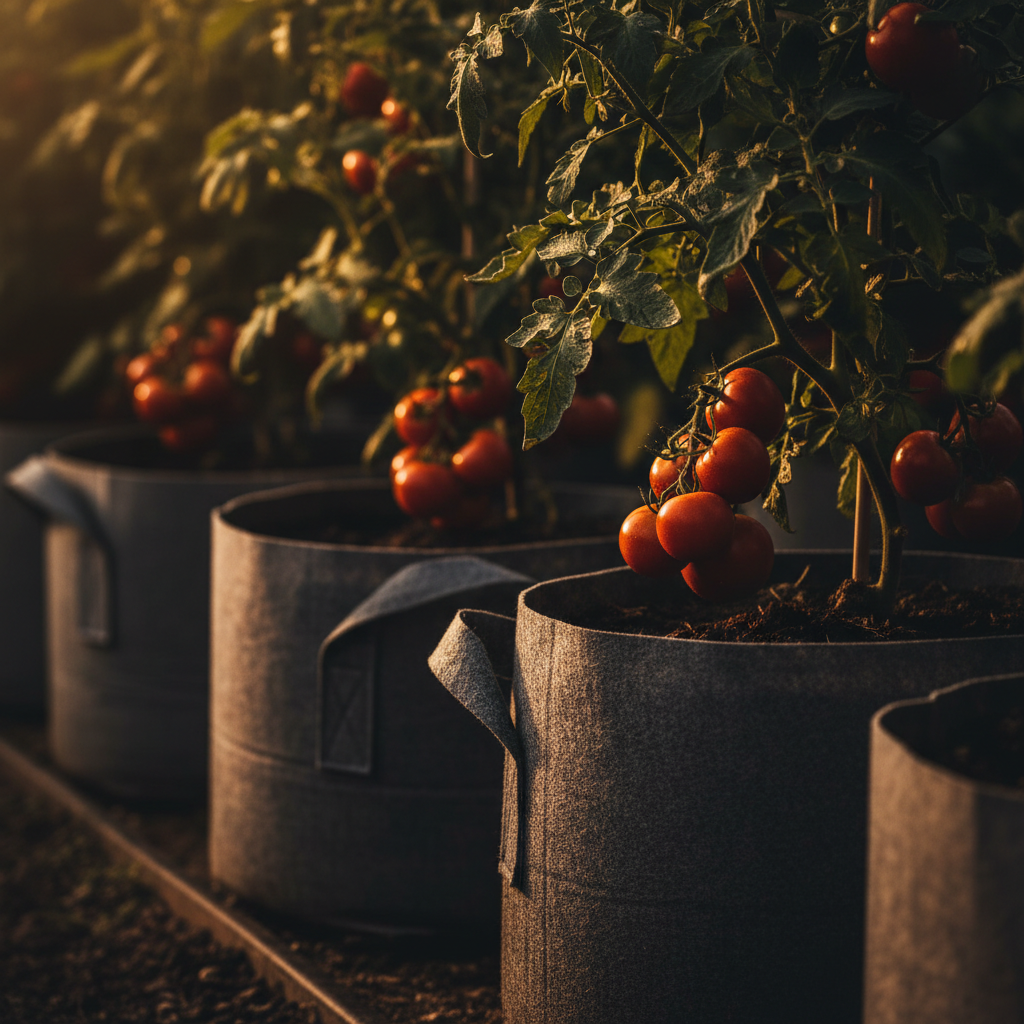
In the Atlanta heat (and by May we're already talking 80s, with June coming in hot), grow bags dry out faster than in-ground beds because air prunes the roots and the fabric breathes. That's actually the point. But it also means you're watering more frequently than you expect. If you're planting tomatoes, peppers, or cucumbers, budget time for a daily check once the temperature climbs past 85°F consistently. That starts earlier in the season than most people plan for.
Full sun placement matters more here than in most U.S. markets. A south-facing exposure against a light-colored fence in Peachtree City or Senoia in July is going to run hot. You want morning sun, some afternoon shade if you can get it for heat-sensitive crops. If your deck faces west, your grow bags are working against the climate, not with it.
The Leafcutter Bee Move Is Underrated
Most Atlanta gardeners know mason bees in passing. Fewer have actually committed to leafcutter bees, which is a mistake if you're running a serious pollinator operation or just want your vegetable yield to go up.
Leafcutters are different from mason bees in timing: they're active later in the season, peak summer rather than early spring. That's a significant advantage in Georgia because it covers the pollination window when mason bee activity drops off. Tomatoes, peppers, squash, melons (the heavy summer producers) are right in the leafcutter's operating window.
The management side is more involved than people expect. The cocoon delivery that The Art of Doing Stuff described, arriving by hand in a zip-lock bag, is exactly how it goes. You're not releasing a hive. You're setting up housing and waiting for emergence on the bees' schedule, not yours. The housing needs to be positioned correctly: facing east or southeast, sheltered from afternoon heat, mounted at a height that keeps it above ground-level predator zones.
If you've already got a mason bee house that's worked, leafcutters will often take to the same style of tube housing. Just don't mix the two species in the same structure if you can help it.
This is one of those projects that has a low barrier to start and a surprising depth once you're in it. Which, come to think of it, describes every outdoor project worth doing.
What the 'Original Mandate' Problem Actually Means
The phrase 'expanded beyond its original mandate' is the most honest description of a live project I've read in a long time.
Every Saturday project has an original mandate. The mandate rarely survives contact with the actual space, actual materials, and actual conditions you find when you start doing the work. This is not a planning failure. This is what real hands-on work looks like.
I spent 20 years across construction (framing, electrical, plumbing, HVAC, roofing, all of it) and I can tell you that the job that ends exactly where it was scoped is the exception. You pull a panel cover and find a wiring situation that's been 'working' for 15 years but was never right. You dig a footer and hit a soil condition nobody marked on the plan. You pull a grow bag out of the corner of the deck and find the drainage situation is different than you thought.
The people who struggle with projects are the ones who treat the original mandate as a commitment rather than a hypothesis. The people who get things done are the ones who treat the original scope as a starting point and adjust based on what they actually find.

That applies to grow bags on a Peachtree City deck. It applies to a full kitchen gut in Brookhaven. It applies to every project where you're working with real materials in a real space.
The project that teaches you something was worth doing. The one that went exactly as planned probably wasn't complicated enough to matter.
Three Things to Know Before You Start This Weekend
If the grow bag or leafcutter bee angle has you thinking about a Saturday project, here's the honest pre-game:
1. Price the soil before you commit to the bags. Grow bags are $3-5 each. Quality potting mix for a five-bag setup runs $60-80 at current prices. Know the real cost before you're halfway in.
2. Get the housing up before the bees need it. If you're ordering leafcutter cocoons, have the nesting structure in place and positioned correctly before emergence. Bees don't wait for you to finish mounting the bracket.
3. Pick your sun exposure based on the season you're in, not the season you're planning for. A spot that gets filtered morning light in April is going to be a heat trap by July. Think ahead two months when you're placing anything in the ground or on the deck.
The projects that work are the ones where you spent 20 minutes thinking before you spent two hours doing. That's not overthinking. That's the difference between a project that gets finished and one that stalls in the middle because something basic wasn't accounted for.
Get out there this weekend. Expand the mandate as needed.
Drop a photo in the comments when you're done. I want to see what Atlanta gardeners are building this spring.
Thinking about a move?
Beckett Real Estate works the whole of Metro Atlanta. Tell me the address or the neighborhood and I will tell you what the house is really like, what the inspection usually finds, and what the number should be.
See homes for saleTalk to an agent nowMore articles like this